
What the exhibition results show
Marmomac 2026 took place in Verona on 22–25 September. In its closing report published on 28 September, StoneNews cites the organiser’s figures: 50,000 professionals from 132 countries and more than 3,200 scheduled B2B meetings. The exhibition brought together machinery, natural stone and its architectural applications. [1], [2]
Reports published after the fair broaden the picture of processing technology. On 29 September, Stone-Ideas described the winners of the new sustainable innovation award, covering residue recovery, water reuse and digital slab management. IFDM’s 5 October article connects production technology with design and responsible resource use. Domus, writing on 2 October, highlights projects that turn stone offcuts into new products. [3], [4], [5]
Stone-Ideas also records a fall in exhibitor numbers compared with the previous year. The scale of the fair alone therefore does not establish an industry-wide investment boom. For a processing plant, the useful question is the specific effect of a solution: how much saleable output it delivers, which costs it reduces and whether buyers exist for a new product range. This is an editorial assessment, not a forecast of investment returns. [3]
Multiwire sawing and the yield of usable slabs
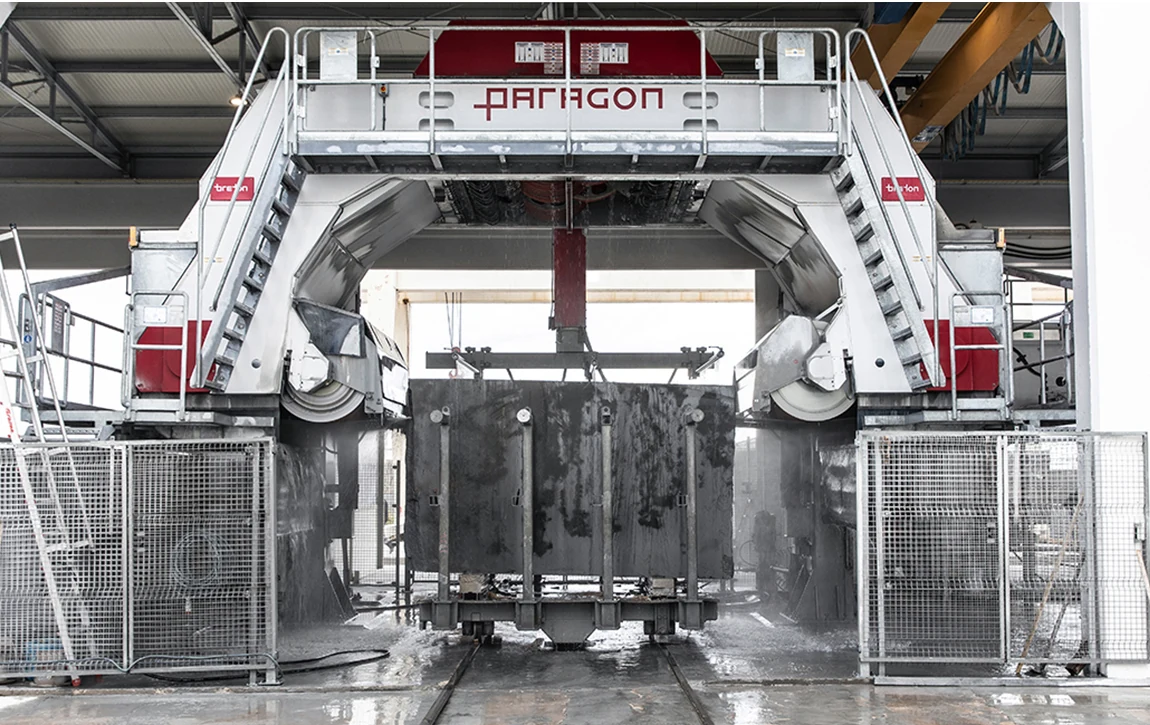
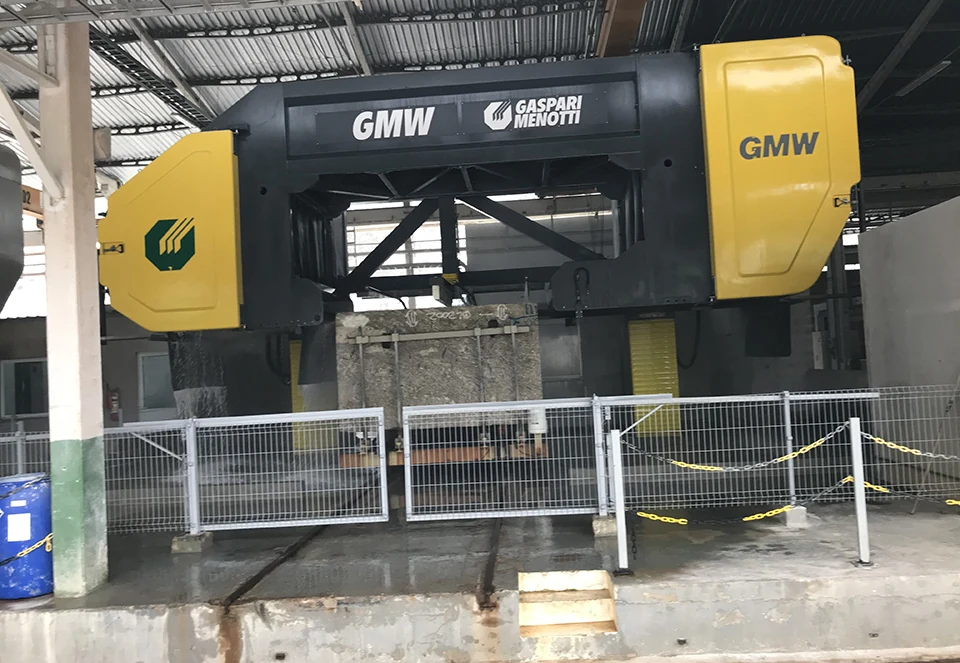
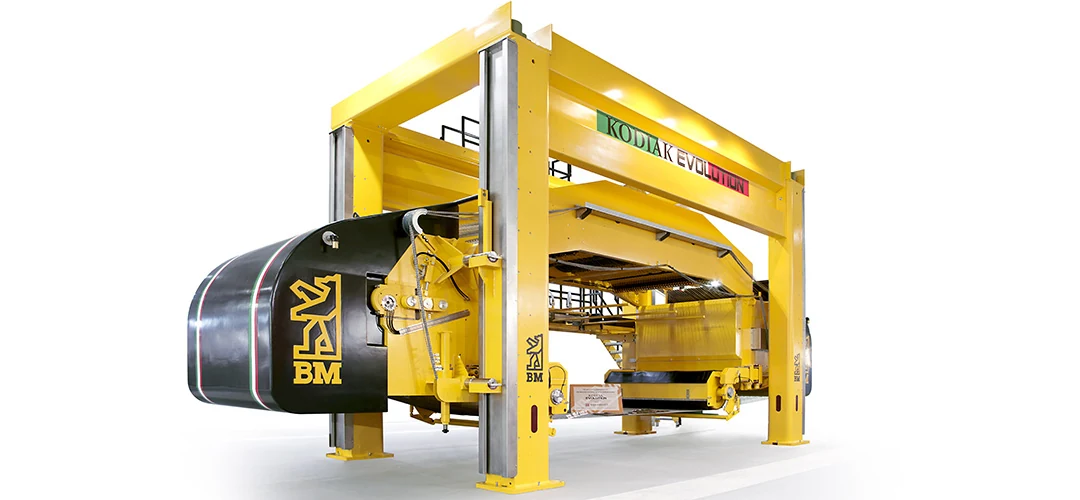
For a business moving from block sales to slab production, a multiwire saw is a central part of the line. Relevant parameters include wire count, diamond bead diameter, available slab thicknesses, cutting configuration and tooling costs.
Manufacturers of multiwire saws for natural stone include Breton, Gaspari Menotti, BM Officine and Pedrini. This list provides a starting point for comparing proposals; it does not rank or endorse a particular brand. [7], [8], [9], [10]
Validate the choice by trial-cutting your own granite. Measure the area of usable slabs after subsequent processing, thickness variation, flatness, wire consumption and cycle time. Yield immediately after sawing does not yet show how much material can be sold.
Sawing capacity must be matched to polishing, crane operations, material handling and storage space. If the next operation cannot keep up, additional output becomes a queue of work in progress.
Polishing and consistent quality
A polishing line must consistently produce the required finish on the particular stone being processed. Head count alone establishes neither actual output nor finish quality.
Practical selection criteria include uniform gloss at operating speed, areas left insufficiently polished, abrasive consumption and the share of material needing reprocessing. Trials should use slabs with the variations in structure normally encountered by the plant.
Compare sawing and polishing throughput in the same units: square metres of usable output per shift. Include loading, changeovers, tool replacement and maintenance. The balance between operations determines whether a new machine can work at its intended capacity.
Digital slab records and cutting-layout planning
The Marmomac results show that digitalisation extends beyond machine control to material data shared between suppliers, warehouses and processors. Rico Technologies’ Lazorex Studio received the Software award. According to the organiser, the platform digitises slabs at their point of origin and synchronises geometry and surface-texture data across the supply chain. [3], [6]
A Ukrainian plant can start with a digital slab record: a unique slab number, its parent block, dimensions, thickness, photograph, visible defects, surface condition, storage location and allocation to an order. Reusable offcuts need the same traceability.
The next step is cutting-layout planning. Breton Sphera, for example, supports slab photography, operator-marked outlines and defects, DXF import and automatic nesting of parts. These are functions of an existing software product; they are not presented here as a 2026 launch. A photograph cannot detect hidden internal cracks. [11]
Assess the effect through part yield, job-preparation time and offcut utilisation. Before buying, check software and machine compatibility, data export, licensing, backups and operator training.
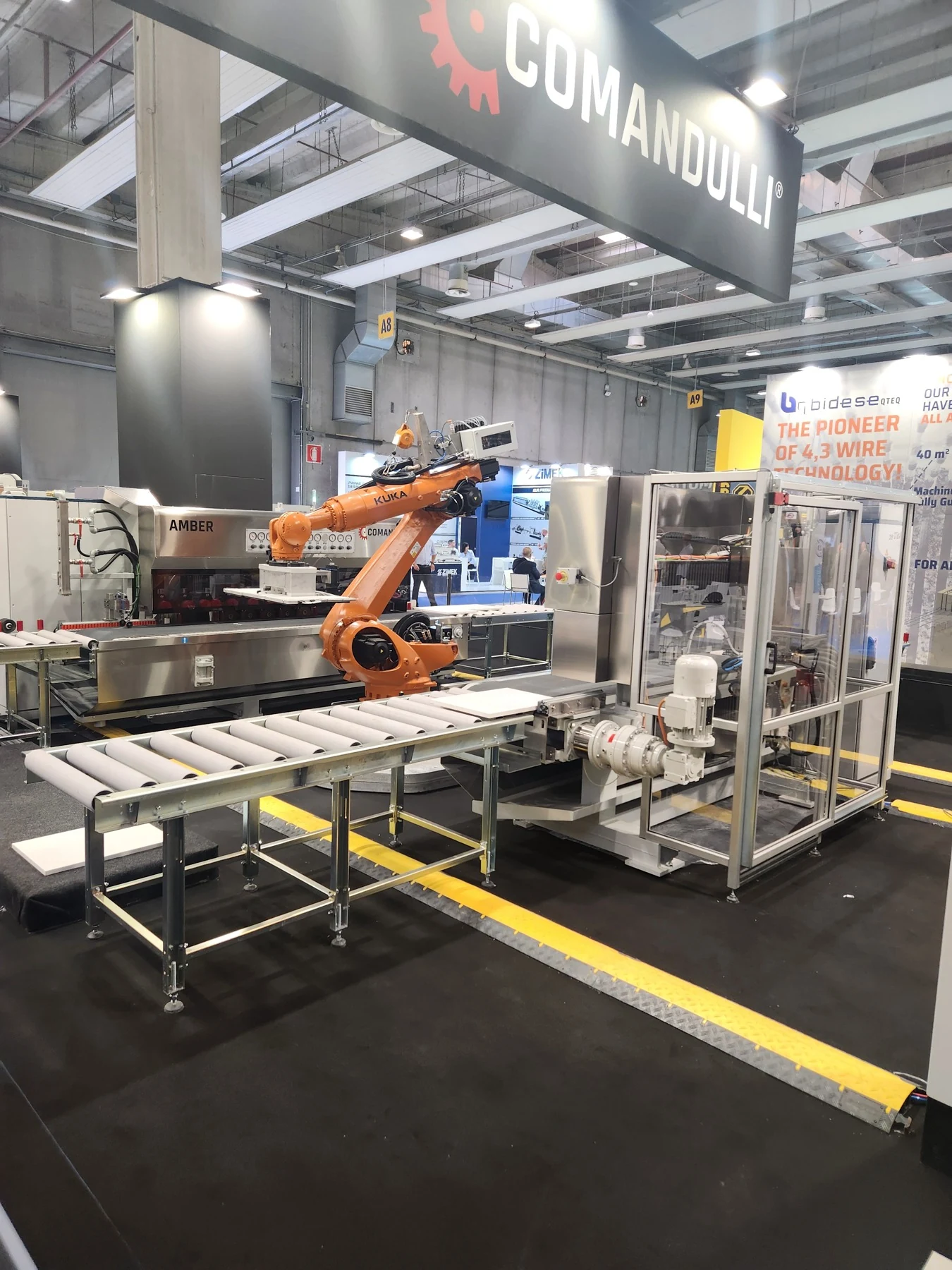
Automating handling between operations
In Biesse’s Marmomac 2026 material, Technic is described as a system combining slab storage, loading, cutting and unloading with Biesse Stone and GMM technologies. It illustrates production organised as an interconnected line. Claimed benefits still require testing against the actual material and product mix. [12]
A Ukrainian business’s first investment may be better-organised handling: suitable lifting equipment, racks, trolleys and material staging areas. Before purchasing, measure how long a machine waits for a slab and how long unloading finished parts takes.
An automatic loader or robotic cell makes sense where operations repeat and utilisation is sufficient. With frequently changing orders, assess programming and changeovers separately. Handling equipment must suit slab weight and geometry and the requirements for safe operation.
Recirculating water and measuring resource use
The closing reports in Stone-Ideas and IFDM show resource efficiency becoming a distinct criterion for evaluating technology. Tesimas’ ORION, a compact system for treating and recovering process water, received an honourable mention in the new award. The organiser also highlights digital monitoring and predictive maintenance tools. [3], [4], [6]
Design water treatment alongside the main machines. Check total water demand, peak loads, sludge characteristics, tank capacity and each machine’s requirements for treated water.
The editorial recommendation is to track water and electricity per square metre of usable output. Include fresh-water top-up, chemicals, filter media, maintenance and sediment handling in the cost calculation. An advertised water-recovery percentage does not replace a production water balance, and water reuse does not remove the need to manage sludge.
Stone residues as raw material for new products
Post-fair reports describe two different approaches to stone reuse. Stone-Ideas covers Dereli Marmo’s Marble-SAND: according to the organiser, it converts marble-quarry residues into alternative construction sand. Domus describes Parasite 2.0’s award-winning Secunda Natura project, in which reclaimed travertine fragments become modular compositions, previously shown at Salone del Mobile 2026. These are different products and different business models. [3], [5], [6]
For a granite processor, the practical starting point is to sort residues by size, quality and possible use. Some may suit tiles, strips, small architectural elements or decorative compositions; others may be used to produce aggregates. The choice depends on technical properties and demand.
Solutions developed for marble or travertine cannot automatically be applied to granite or granite sludge. Test composition, grading, final-product properties, sorting and processing costs, transport and the availability of buyers. Crushing all residues without this assessment can destroy the value of material suitable for higher-value products.
New finishes and collaboration with designers
IFDM presents Marmomac as a meeting point for technology and contemporary design. In Domus, stone is a material for spatial and product design, including modular products made from offcuts. For a producer, this suggests evaluating the product range together with its intended architectural use. [4], [5]
The technological element is controlled surface finishing. Award-winning solutions in 2026 include the Nuova Hammer 12/30 surface-processing tool and BSB60 anti-skid M/C. An award records the jury’s assessment; it does not establish identical performance on every stone type. [6]
A Ukrainian company can prepare a sample library of its own granite with different finishes, drawings of standard products and descriptions of intended uses. Exterior elements need testing of properties relevant to the particular project. Select a new tool or treatment against customer requirements and repeatable quality in series production.
Chemicals and reinforcement suited to the material
Stone-Ideas’ post-fair report includes Ilpa Adesivi’s Mastice BLU among the recognised products. The organiser links the award to its styrene-free formulation and reduced worker exposure to volatile compounds. This concerns a specific bonding product; the award does not establish suitability for every slab-resining process. [3], [6]
Determine the need to reinforce granite through testing and the requirements of the finished product. Assess strength after treatment, surface appearance, behaviour during polishing and use, and compatibility between materials and process conditions.
The budget includes drying, resin, consumables, process hold times and quality control. Chemical selection should rely on technical documentation and the safety data sheet. The absence of one ingredient does not by itself make a material safe under all conditions of use.
What this means for a Ukrainian business
The practical conclusion after Marmomac 2026 is to evaluate technologies by their contribution to the finished product. Digital records and resource monitoring can be introduced gradually. Sawing, polishing and automated handling require a coordinated project. New finishes and products made from residues need a demonstrated customer requirement.
There is no universal purchasing sequence. The first priority is the operation that limits output or causes the largest losses. The matrix below is an editorial assessment to help choose a direction for trials.
| Business situation | First priority | Validation criterion |
|---|---|---|
| Starting slab production from blocks | Balance sawing, polishing, handling and water treatment | Usable output per shift |
| Tiles and strips from slabs | Cutting layout, accuracy and offcut records | Cost per part and reject rate |
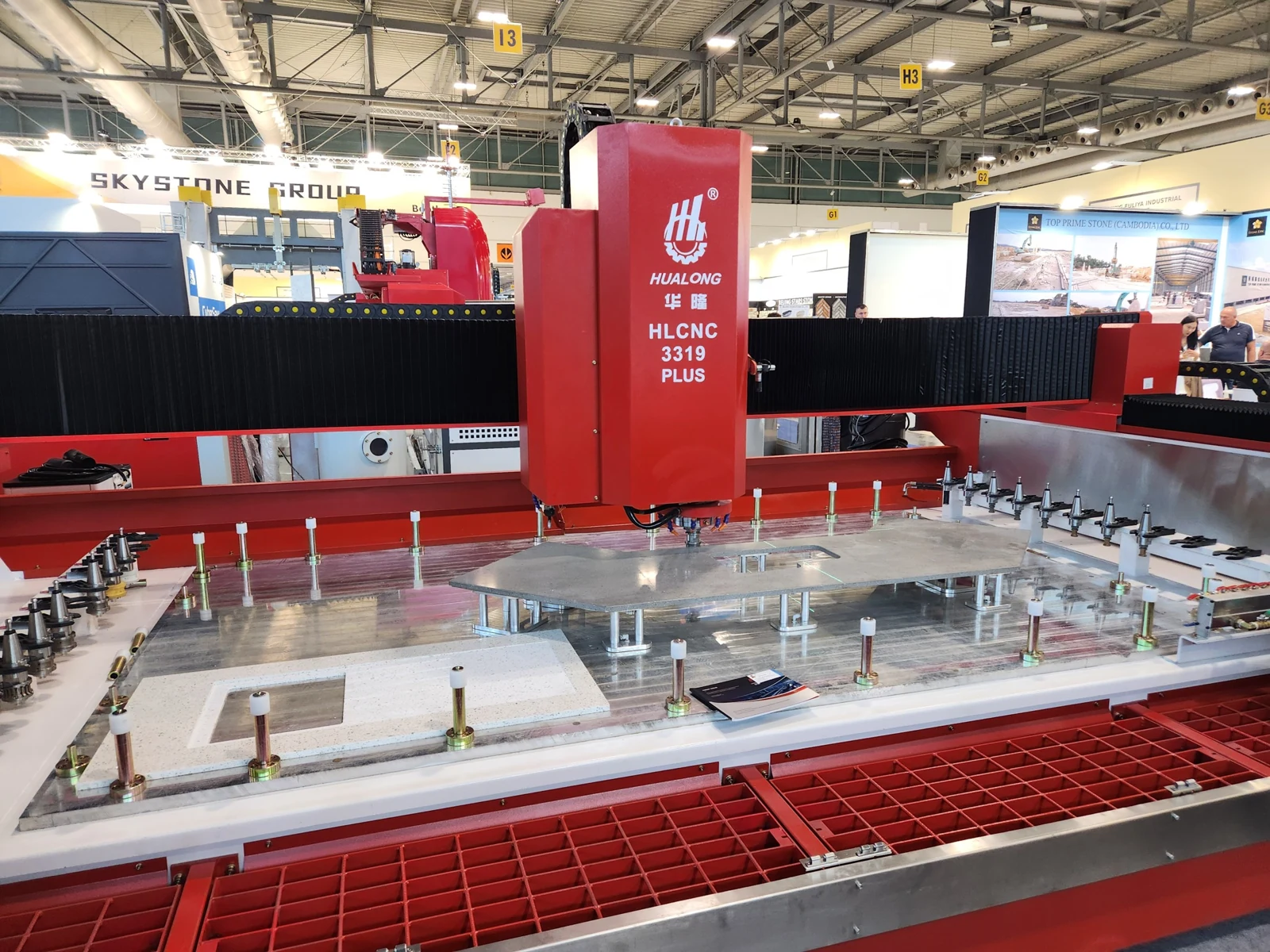
| Bespoke products | CNC and digital planning | Complete cycle for a typical order |
| Machines waiting for material | Mechanised loading and internal logistics | Waiting time between operations |
| Losses caused by defects | Tooling, process settings and reinforcement trials | Change in usable yield |
| Residues with no defined use | Sorting and trials for a new product | Margin including processing and delivery |
| Demand for new finishes | Samples and surface testing | Compliance with project requirements |
Before signing a contract, agree on trials using your own material and acceptance criteria covering geometry, surface quality, actual throughput and tool consumption. Specify the equipment scope, installation, training, warranty service, spare-parts lead times and access to software separately.
To address the risk of power interruptions, check safe shutdown and cycle-recovery procedures. The full project cost includes foundations, utilities, lifting equipment, delivery, commissioning and working capital for startup. Calculate returns against your own production plan and orders.
Sources
- Marmomac 2026 Events — official programme and datesOpen source
- StoneNews, 28 September 2026 — Marmomac results citing the organiserOpen source
- Stone-Ideas, 29 September 2026 — Final Report on Marmomac 2026Open source
- IFDM, 5 October 2026 — Timeless stone at MarmomacOpen source
- Domus, 2 October 2026 — Marmomac Best Communicator Award 2026Open source
- Marmomac — 2026 International Award for Sustainable Excellence winnersOpen source
- Breton — Paragon multiwire sawOpen source
- Gaspari Menotti — GMW 2000 at Grupo QualitàOpen source
- BM Officine — Kodiak EvolutionOpen source
- Pedrini — Jupiter multiwire sawOpen source
- Breton Sphera — official software functionsOpen source
- Biesse — Technic at Marmomac 2026Open source